
When Should You Build a Custom WordPress Plugin?
Off-the-shelf plugins cover a lot, but not everything. Learn the signs that a custom WordPress plugin is the right call, when it is not, and what a…
Functionality, written to order
When no existing plugin does what your business needs, or the ones that do are bloated and insecure, we write a focused plugin that solves the problem cleanly and stays maintainable.
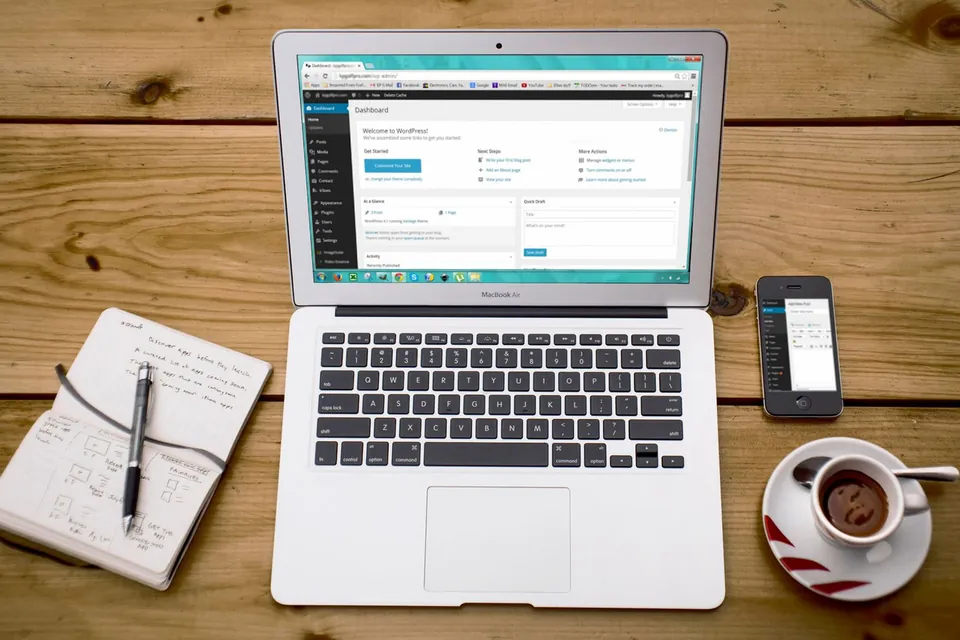
WordPress plugin development is writing a self-contained software package that adds specific functionality to a WordPress site, independent of the active theme. A custom plugin can handle business logic, admin tools, data imports, API integrations or new content features, and keeps working even if the site’s design or theme changes in future.
There are tens of thousands of free and premium plugins, yet businesses still hit gaps. A plugin may cover most of what you need but not the part that matters, or it may load scripts on every page to deliver one small feature. Sometimes the requirement is simply unique to your workflow.
A custom plugin is the right answer when functionality should outlive the design. Logic placed in a theme disappears when the theme changes; logic in a plugin stays. We build plugins for:
Each plugin follows WordPress coding standards, with input validation, nonces, capability checks and prepared database queries. Where the requirement is larger than a plugin, such as a full portal, we may recommend a custom web application instead.
Companies whose quoting, booking, registration or approval process does not fit any existing plugin and currently relies on spreadsheets and email back-and-forth.
Organisations that need WordPress to talk to a CRM, ERP, payment provider, SMS service or internal API without fragile third-party connector tools.
Website owners using a large, general-purpose plugin for one small feature, who would rather replace it with lean code that does only that job.
Founders building a SaaS add-on or a WordPress product who need a developer to turn their idea into a structured, maintainable and secure plugin.
Plugins run with full access to your site and database. A poorly written one can slow every page, conflict with others, or open a security hole; missing permission checks and unsanitised inputs are among the most common causes of WordPress vulnerabilities. Many hurried custom plugins also hard-code settings and leave no documentation, so the next developer has to start again.
We treat a plugin as a small software product. Requirements are written down first, including edge cases and who should be able to do what. The code follows WordPress coding standards, uses namespaces and a clear folder structure, and relies on WordPress APIs such as the Settings API, REST API and WP-Cron rather than reinventing them. Every form and endpoint is protected with nonces, capability checks and sanitisation. Assets load only where needed. The plugin is kept in Git, versioned properly and delivered with installation and usage notes.

Scope
Custom admin screens, reports, settings pages and bulk actions that give your team the controls they need without exposing complex settings.
Two-way connections with CRMs, ERPs, accounting software, SMS or WhatsApp providers, with error logging and retry handling for failed requests.
Multi-step forms, quote builders, calculators, registrations and approval flows with conditional logic, email notifications and submissions stored safely in your database.
Secure REST API endpoints so mobile apps, front-end frameworks or external systems can read and write WordPress data with proper authentication.
Scheduled imports from CSV, XML or external feeds, and sync jobs that keep products, listings or records up to date automatically.
Extending an existing plugin safely through its hooks, or fixing and refactoring an undocumented custom plugin left behind by a previous developer.
Process
We document what the plugin must do, who uses it, what data it stores and how it interacts with other systems.
We decide where data lives, which WordPress APIs to use, and how settings, permissions and hooks will be structured.
The plugin is built in Git and demonstrated on staging at agreed milestones, so you can test real behaviour early.
We test permission handling, input validation, PHP versions and conflicts with your existing theme and plugins.
The plugin is deployed with documentation, and we remain available for fixes, WordPress compatibility updates and new features.
Technologies
No paying for, or loading, dozens of features you will never use just to get the one you do.
Because the functionality lives in a plugin, you can change theme or design without losing it.
Security checks are built in from the start rather than bolted on after a problem appears.
No recurring licence fees for the custom plugin, and full rights to modify or extend it later.
FAQs
Still have a question?
Ask us directly — you’ll get a straight answer from the team that does the work.
Build a custom plugin when no existing plugin fits your workflow, when the available options are heavy or poorly maintained, or when the feature is core to your business. If a reputable, well-maintained plugin already covers your needs, we will recommend using it, as that is usually quicker and more economical.
Often, yes, but not by editing its files directly, because updates would overwrite those changes. Good plugins provide hooks and filters, and we write a small companion plugin that uses them to change behaviour. If the plugin offers no extension points, we will discuss whether replacing it is the safer option.
It should not, if it is built carefully. We load scripts and styles only on the pages that need them, cache expensive queries and external API responses, and avoid running heavy tasks on every page load. Background jobs such as imports run on a schedule rather than during visitor requests.
Once the project is paid for, your business owns the custom plugin code and can use, modify or extend it. We keep the code in a Git repository and can hand it over in full. Any third-party libraries included remain under their own open-source licences, which we list in the documentation.
It depends entirely on the scope. A focused admin tool is a much smaller job than a multi-role workflow with API integrations. After we write the specification together, we can give you a realistic estimate and milestone plan for your plugin, rather than a generic figure that may not apply.
Off-the-shelf plugins cover a lot, but not everything. Learn the signs that a custom WordPress plugin is the right call, when it is not, and what a…
Every plugin adds code, risk and upkeep. This step-by-step guide shows how to audit your WordPress plugins, decide what to keep, replace or remove…
Client testimonials
DA WebTech Innovations ne hamari website ko professional aur modern look diya. Team ka response fast tha aur requirements ko achhe se samjha. Highly recommended for website design services.
Get in touch
Share a few details about your business and what you need. The DA WebTech team replies within one business day with questions, ideas and a clear next step — no obligation.
Quick enquiry
Leave your details and we’ll call or WhatsApp you within one business day.