
Industries · Retail
Website Design and Local SEO for Retail Stores
For shops, showrooms and multi-store retailers, we build websites that show what you stock, help customers find the nearest store, promote current offers and, where it makes sense, add online ordering or click-and-collect.
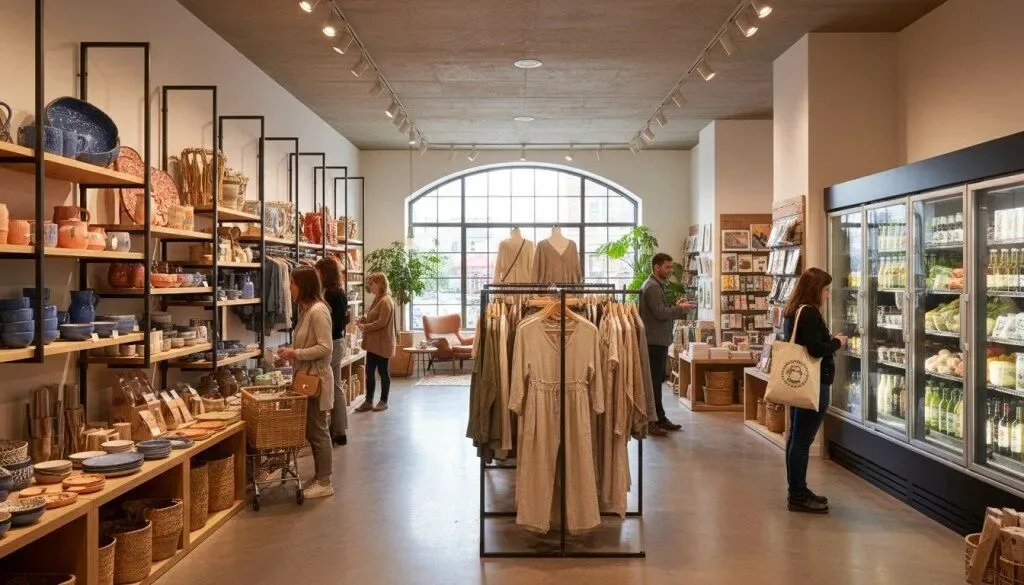
Does a retail store with physical shops need a website?
Yes. Most customers check online before visiting a shop: what you stock, price range, timings, location and reviews. A retail website and Google Business Profile answer these questions and bring people through the door. Online ordering is optional; for many retailers the first goal is more store visits, calls and WhatsApp enquiries.
Retail businesses with physical stores have a different goal from online-first brands. A furniture showroom, electronics shop, jewellery store or clothing retailer mainly wants customers to visit, call or message. The website must answer pre-visit questions: what do you sell, which brands, what price range, where is the nearest store and is it open now.
DA WebTech builds retail websites with product range or category showcases, brand pages, current offers, and a store locator with address, map, timings and click-to-call for each outlet. Each store can have its own location page linked to its own Google Business Profile, which is often the most effective part of local business SEO for retailers. WhatsApp enquiry buttons on products let customers check availability before travelling.
When you are ready to sell online, we can add a catalogue with online ordering, click-and-collect or local delivery, connected to the same product data. We plan this carefully, because stock accuracy between shops and website matters more for retailers than for pure online stores. Offers and prices should also be accurate and consistent between the website and stores, to avoid disputes at the counter.
Common challenges
What limits retail websites
-
No reason to visit
Websites that only show a logo and an address do not tell customers what they will find in store, so they choose a shop that does.
-
Store details inconsistent
Timings, phone numbers and locations differ between the website, Google and social pages, sending customers to closed or relocated stores.
-
Offers out of date
Expired sale banners and old festive offers stay on the website, confusing customers and creating awkward conversations at the counter.
-
Stock mismatch online
Retailers who add online ordering without linking stock end up selling items that are not available, damaging trust in both channels.
What we build
What we build for retailers
-
Store locator
Every outlet with address, map, timings, phone and directions, plus individual store pages for local search.
-
Range and brand showcase
Category and brand pages that show what customers can expect in store, with price ranges where you choose.
-
WhatsApp product enquiries
Product-level enquiry buttons that send the item name to your store team, helpful for checking availability.
-
Offers and festive campaigns
Offer pages and banners with start and end dates, so seasonal promotions appear and expire on time.
-
Local SEO for each store
Google Business Profile optimization and consistent details for every outlet across major listings.
-
Optional online ordering
Online catalogue, ordering, click-and-collect or local delivery, linked to the same product data when you are ready.
Site structure
Pages that bring customers into your stores
For a retailer, the website is a shop window customers look through before they decide to travel. These pages give them reasons to visit and remove doubts about timings, stock and service.
-
Individual store pages
Each outlet with photos of the storefront and interior, timings, parking, the brands or sections stocked there, a store contact and a map link, connected to that store’s Google listing.
-
Brands we stock
A page for each major brand you carry, listing the categories and price ranges available in store. Customers often search for a brand plus their area, and these pages can meet that search.
-
Sale and festive calendar
Current and upcoming offers for Diwali, Navratri, wedding season or end-of-season sales, with start and end dates and the stores where each one applies.
-
Services and after-sales
Installation, alterations, home delivery, warranty handling, exchange policy and repair support explained clearly. For electronics, furniture and appliances, these services often decide where customers buy.
-
Loyalty programme
How customers earn and redeem points or member benefits, with sign-up and a balance check if your billing system supports it, giving regular customers a reason to keep coming back.
-
New arrivals and lookbooks
Seasonal collections, new launches or styled room settings, refreshed regularly to give customers a reason to revisit the website and, more importantly, the store.
Retail website features and their purpose
| Feature | What it does | Why it matters for retailers |
|---|---|---|
| Store finder with filters | Finds the nearest outlet by area or pin code, with open-now status | Customers go to a store that is open and stocks what they need |
| Reserve in store | Lets customers hold an item to see or try at a chosen outlet | Turns online browsing into a planned visit with clear intent |
| Availability by store | Shows which outlets carry an item, where data allows | Saves wasted trips and repeated calls about stock |
| Offer scheduler | Publishes and expires offer banners on set dates | Keeps promotions accurate and avoids disputes at the counter |
| Appointment booking | Books personal shopping, fittings or product demos | Useful for jewellery, bridal wear, furniture and high-value electronics |
| Catalogue with WhatsApp enquiry | Shows products with a one-tap enquiry button | Customers ask about price, size or colour before travelling |
| Local business schema | Adds structured data for each store location | Helps search engines connect each outlet with its address and timings |
Our approach
How we approach a retail website
-
Visit the stores
We see your outlets, talk to store managers about common customer questions and photograph what makes each store worth visiting, from layout and displays to service counters.
-
Decide the online role
Together we agree whether the site should drive visits, enquiries, reservations or online orders, because each goal changes the structure, data needs and staffing involved.
-
Standardise store data
Names, addresses, timings and phone numbers are cleaned once and fed to the website and Google profiles from a single source, so every listing matches.
-
Plan the offer cycle
We set up a calendar of festive and seasonal campaigns with banners, offer pages and expiry dates, so your marketing team can prepare well ahead of each season.
How does a local shop compete with online marketplaces?
Not by copying them. A marketplace will usually win on range and convenience for standard products. A local retailer wins on things a marketplace cannot easily offer: seeing and touching the product, expert advice, same-day availability, installation, alterations, easy exchanges and staff who remember the customer. The website’s job is to make those advantages visible before the customer decides where to buy.
That usually means:
- Showing range honestly, with brands and price bands, so customers know the trip will be worthwhile
- Making service visible: demos, fitting, delivery and after-sales explained clearly
- Being easy to reach, with WhatsApp enquiry, timings and directions on every page
- Owning local search for brand and category searches in your area
For multi-store retailers, each outlet needs its own location page and a verified Google profile with real photos and accurate hours. Reviews help too, especially when customers mention staff and service. This is where local business SEO and Google Business Profile optimization do most of the work, while the website gives customers the full picture.
FAQs
Retail website FAQs
Still have a question?
Ask us directly — you’ll get a straight answer from the team that does the work.
Should a retail store start selling online immediately?
Not necessarily. If your strength is in-store service or products customers want to see first, start with a website that drives visits and enquiries. Add online ordering when you have reliable stock data, delivery arrangements and someone to manage orders. Rushing into online selling without these usually creates more problems than sales.
How do we manage multiple store locations online?
Give each store its own page on the website with address, timings, map and phone, and its own verified Google Business Profile. Keep details identical across the website, Google and other listings. We build the store data in an admin panel, so updating timings or adding a new outlet is straightforward.
Can customers check stock availability on the website?
It is possible if your billing or inventory software can share stock data with the website. Many retailers start with a WhatsApp or call option for availability, which is simpler and still useful. We review your existing systems before recommending real-time stock display, because inaccurate stock information frustrates customers.
Is retail different from e-commerce in your approach?
Yes. For retailers, the website supports physical stores through local search, store pages, offers and enquiries, with online ordering as an optional addition. For online-first brands, the website is the main sales channel, and checkout, payments and shipping are central. We plan your site based on where your customers actually buy.
Can our billing software update prices and stock on the website?
Often, yes, depending on the software. Many retail billing and POS systems can export product, price and stock data, either through an API or scheduled files, which we can import into the website. Where no export exists, a regular upload from Excel is a practical starting point. We check your system before promising anything close to real-time sync.
Should we show prices for products that are mainly sold in store?
Showing prices or price ranges usually helps customers decide whether to visit, and reduces calls asking the same question. Make sure website prices match in-store prices, or state clearly that prices may vary by store and offer. For items with frequent price changes, such as electronics, a starting-from price with an enquiry option is easier to keep accurate.
Can a retail website handle franchise or dealership enquiries?
Yes. If you are expanding through franchises or dealers, a dedicated page explaining the model, the support you provide, suitable locations and how discussions proceed, with a qualifying enquiry form, keeps those leads separate from customer enquiries. Keep financial details general on the page and share specifics in proper discussions, ideally with professional advice on agreements.
Client testimonials
What our clients say
-
Dalskhukbhai
DA WebTech Innovations ne hamari website ko professional aur modern look diya. Team ka response fast tha aur requirements ko achhe se samjha. Highly recommended for website design services.
Get in touch
Tell us about your project
Share a few details about your business and what you need. The DA WebTech team replies within one business day with questions, ideas and a clear next step — no obligation.
- Emailinfo@dawebtech.in
- Phone+91 93276 78718
- WhatsAppChat on WhatsApp
- OfficeDA WebTech Innovations, Ahmedabad, Gujarat, 380004, India
- HoursMon–Sat, 10:00 AM–8:00 PM IST